
.png)


What Is Play Value, and Why Does It Matter in Playground Design?

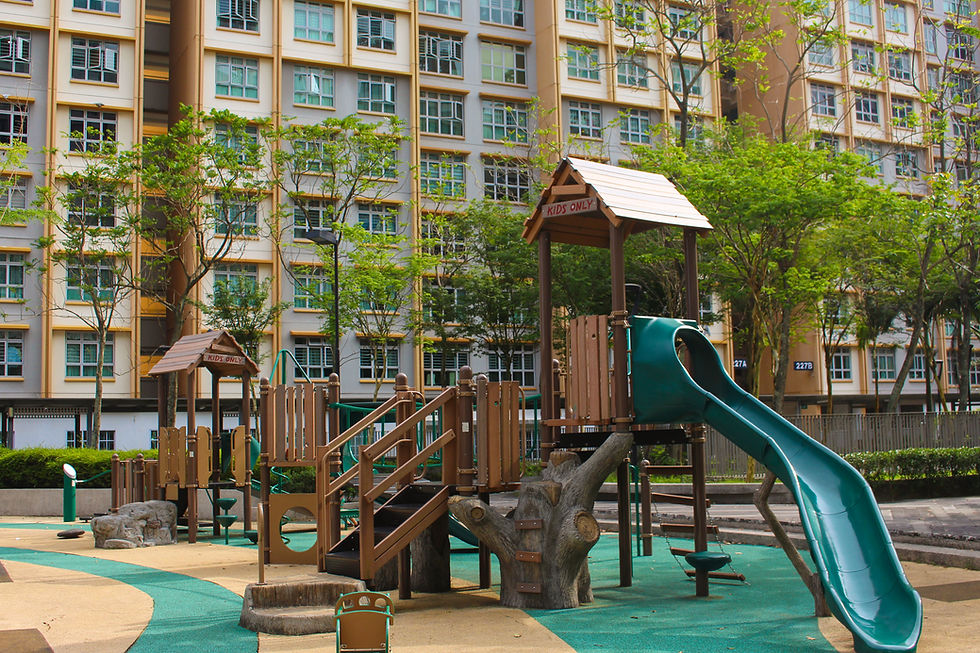
In Singapore, playgrounds are more than just places to play. They sit within HDB estates, neighbourhood parks, schools, and community spaces, serving families from many backgrounds and age groups every day. Some playgrounds stay lively from morning to evening, while others see brief bursts of activity before children move on.
What makes the difference is not always size, colour, or theme. It is play value.
Play value describes how well a playground supports meaningful, engaging play over time, even in compact spaces and high-use environments. In a city where land is limited and playgrounds must work hard to serve many children, play value determines whether a space becomes a daily favourite or just a passing stop. Understanding play value helps parents and communities recognise why some playgrounds continue to attract children long after the novelty has worn off.
Understanding What Play Value Really Means

Play value refers to the quality and depth of play experiences a playground offers. It focuses on what children can actually do in the space, rather than what the playground looks like.
A playground with strong play value allows children to move freely, explore at their own pace, make choices, and discover new ways to play each time they visit. It supports different play styles, from active physical play to imaginative and social play. Importantly, play value is not dependent on size or complexity. Even a small playground can have high play value if it offers flexible and meaningful play opportunities.
Why Play Value Matters More Than Ever

Children today grow up surrounded by digital entertainment that is fast, predictable, and always available. For physical play spaces to remain relevant, they must offer experiences that screens cannot provide. Playgrounds need to encourage movement, social interaction, sensory exploration, and self-directed play.
Play value matters because it encourages children to stay longer, return more often, and remain engaged as they grow. It supports physical development, builds confidence, and helps children learn how to interact with others. A playground with strong play value becomes part of a child’s routine, rather than a place that is quickly outgrown.
How Play Value Is Created in a Playground

Play value is built through thoughtful planning rather than visual impact alone. It begins with offering a variety of play experiences within the same space. Children play differently depending on their personality, age, and mood. Some enjoy climbing and running, while others prefer quieter exploration or imaginative play. When a playground supports multiple types of play, more children feel included and engaged.
Play value is also strengthened through open-ended play. Instead of prescribing exactly how a feature should be used, open-ended elements allow children to decide for themselves. A water feature, for example, can become a science experiment, a social gathering point, or a calming sensory experience. This flexibility keeps play fresh and interesting over time.
Appropriate challenge is another key factor. Children are naturally drawn to activities that test their abilities. Climbing, balancing, and navigating obstacles help children build confidence and resilience. When these challenges are carefully designed, they allow children to feel a sense of achievement without compromising safety.
The Role of Inclusivity in Play Value

Play value is limited if only some children can participate. Inclusive playgrounds consider a wide range of ages, abilities, and comfort levels. This includes providing gradual levels of difficulty, clear and intuitive layouts, and features that can be enjoyed in different ways.
When children of different abilities can play alongside one another, the playground becomes more social and meaningful. Inclusive play supports empathy, cooperation, and shared experiences, all of which contribute to stronger play value.
How Play Value Supports Child Development

Play value plays a direct role in supporting children’s development. Through physical play, children develop strength, balance, and coordination. Through exploratory and imaginative play, they build problem-solving skills and creativity. Social play helps children learn communication, cooperation, and conflict resolution. Emotional growth is supported as children gain confidence, independence, and resilience through play.
Although playgrounds are often seen as places for fun, the experiences they offer contribute quietly and consistently to a child’s overall development.
Play Value in Singapore’s Urban Environment

In a dense urban environment like Singapore, playgrounds often need to serve many users within a limited space. This makes play value especially important. Rather than relying on size or spectacle, high-play-value playgrounds maximize what each feature offers.
Well-designed playgrounds in urban settings provide multiple ways to play within compact areas. They support a wide age range, encourage repeat visits, and remain engaging despite heavy use. Strong play value ensures that even small playgrounds feel rich, dynamic, and rewarding.
The Relationship Between Play Design and Play Value

Play design and play value are closely connected, but they are not the same. Play design helps attract attention, create identity, and organise space. Play value ensures that the space remains engaging and meaningful over time.
When design focuses only on appearance, play value often suffers. When play value is prioritised without thoughtful design, the space may feel confusing or uninviting. The most successful playgrounds are those where design supports play value, rather than overshadowing it.
Conclusion
Play value is what transforms a playground from a collection of equipment into a place where children grow, connect, and return to again and again. It determines whether a playground simply looks good or truly supports meaningful play.
By understanding play value, parents and communities can better appreciate why thoughtful playground design matters. When play value and design work together, playgrounds become lasting spaces that support children well beyond their first visit.
👉 Interested in creating playgrounds with lasting play value? Retro-Max designs play spaces that balance thoughtful design with meaningful, engaging play experiences. Contact us today


Comments